
Historians Unearth a Conflict of Interest, Prompting a Retraction by The Lancet Journal
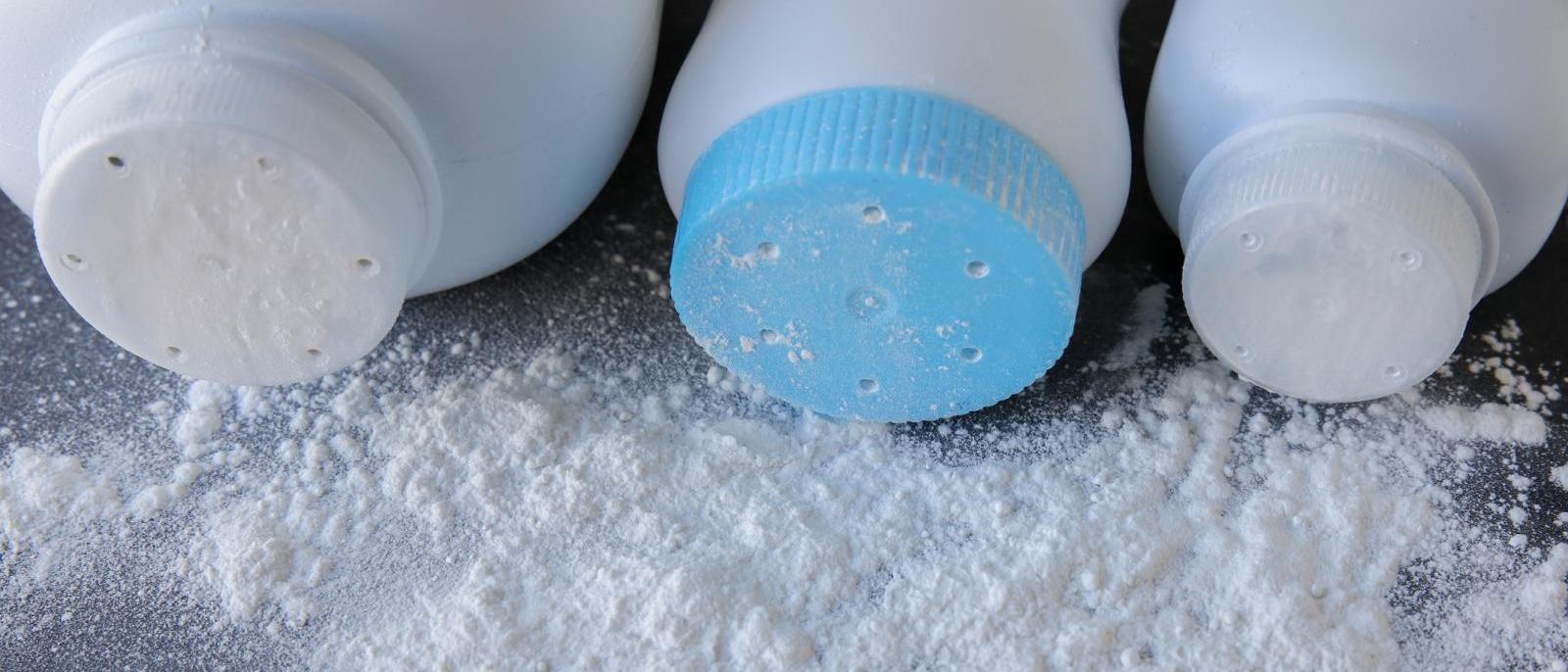
On March 25, The Lancet, one of the oldest and most prestigious academic journals, issued a rare retraction based on research by Columbia Mailman School public health historians Gerald Markowitz and David Rosner. The journal retracted—in essence, disavowed—an unsigned 1977 commentary claiming that talcum powder poses no serious health risks, despite robust contemporaneous scientific evidence to the contrary.

The journal’s retraction was prompted by a December 8 email from Markowitz and Rosner to the journal, which identified a glaring conflict of interest. They presented evidence that the commentary was written by a consultant paid by Johnson & Johnson, one of the world’s leading producers of cosmetic talc products. Furthermore, the author shared an advanced draft of this piece with Johnson & Johnson and amended it based on their feedback. “This unsigned commentary had a role in both staving off federal regulation of asbestos in cosmetic talc in the 1970s, and in more recent lawsuits seeking to hold cosmetic manufacturers accountable for diseases and deaths,” they wrote.
Responding to the revelations, the journal replied: “Despite not having a complete record of The Lancet’s previous editorial policies, [the unsigned author’s] conflict of interest with Johnson & Johnson was a clear breach of publishing ethics. In our view, had the editors at the time known of this situation and been aware of the author’s undeclared competing interest, they would not have published this commentary. The Lancet has therefore decided to retract the commentary.”
How the Evidence Came to Light

Markowitz and Rosner, both emeritus professors at Columbia Mailman School in the Department of Sociomedical Sciences, have studied industrial pollution and contaminants since the early 1970s and have co-authored several books. In the early 2010s, the duo began an investigation into asbestos and asbestos-related disease, and into the cosmetics industry's role in weakening the regulation of asbestos contamination in talcum powder. In tandem, Rosner and Markowitz have provided expert testimony in cases related to asbestos and other contaminants. (In 2018, the U.S. Supreme Court refused to hear an appeal by three paint manufacturers, holding them responsible for lead contamination in thousands of homes in California. Decades in the making, the decision hinged in large part on historical research and court testimony by Markowitz and Rosner.)
Rosner, who is also Professor Emeritus of History, explains: “We have testified on behalf of women suffering from ovarian cancer linked to exposure to talcum powder polluted by asbestos. In these cases, we are occasionally confronted by the defense with the unsigned commentary that appeared in The Lancet in 1977, which claimed that asbestos in talc was not dangerous. We have been surprised by this piece as The Lancet must have known that asbestos was a pollutant of talc and therefore must have been suspect in 1977.”

Sure enough, when they reviewed corporate records and documents made public through court discovery, they came across evidence of the conflict of interest in the form of a memo, a letter, and a draft of the commentary. These documents are archived in ToxicDocs, an open-source, online database of more than 15 million pages of documents related to silica, lead, vinyl chloride, and asbestos that were previously not easily accessible. Merlin Chowkwanyun, Donald H. Gemson Associate Professor of Sociomedical Sciences in the Center for the History and Ethics of Public Health, led the effort to digitize and index the archive.
Rosner continues: “In going through our huge collection of data we have collected we came across the answer: The Lancet editorial was not written by their editors but was written by a consultant to the Johnson & Johnson company which was seeking to allay physicians and regulators worries about asbestos. It was quite revealing how clearly Johnson & Johnson executives understood what they were doing and how blithely a respected scientist was willing to cooperate with them. It is a terrible statement both about Johnson & Johnson and about scientists we always believe are above such things. Of course, it makes me wonder if corporate corruption of science and scientists still goes on, perhaps in more subtle ways.”
After receiving the email from Markowitz and Rosner, the journal immediately responded, expressing shock and promising a response. “The Lancet reaction proved to me that at least one great journal has real integrity. It also proves how important historical research is in understanding public health today,” Rosner says.
Media Contact
Tim Paul, tp2111@columbia.edu