
Dustin Duncan, ScD
- Professor of Epidemiology
- Associate Dean for Health Equity
On the web
Overview
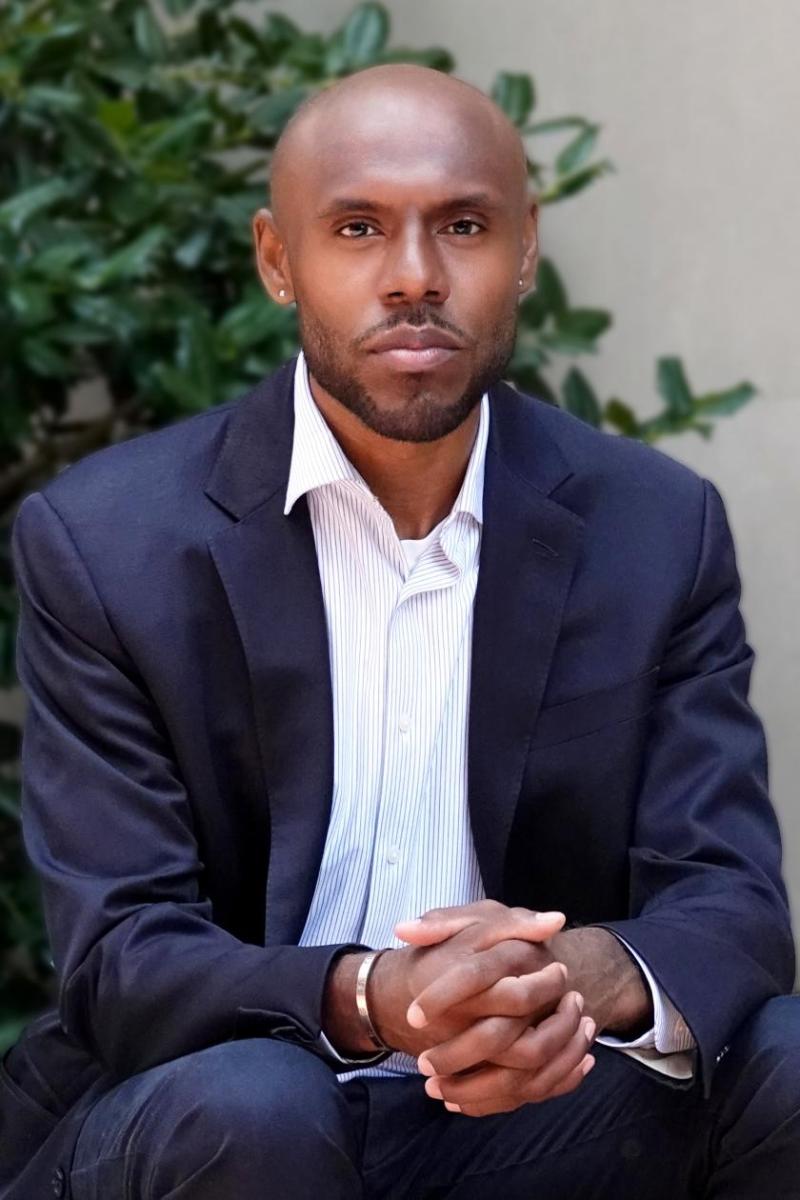
Dr. Dustin T. Duncan is an internationally recognized academic leader and equity strategist. He creates and leads initiatives to rearchitect research systems, faculty development, and university design, operationalizing justice-centered higher education scholarship within academic institutions. His work reshapes organizational structure, power distribution, and production infrastructure for greater equity-centered outcomes. He is widely regarded as a transformative leader at the intersection of public health, equity, and higher education strategy.
His frameworks include the Health Equity Research Production Model, a redesign of research and governance infrastructures and incentive systems to enable equitable knowledge production at scale; The Step-Up Mentorship Model, which combines intentional sponsorship, structured skill-building, and progressive leadership opportunities to accelerate the success and visibility of early-career scholars, particularly those from historically underrepresented backgrounds; and writing accountability strategies, currently being instituted throughout Columbia University in collaboration with the Office of the Vice Provost for Faculty Advancement.
Author of several books and more than 300 other publications, Dr. Duncan is Associate Dean for Health Equity Research and Professor of Epidemiology at Columbia University, a social epidemiologist with a specialization in spatial, trauma-informed, and mobility-based approaches to health equity. He is the founder of the Dustin Duncan Research Foundation, which provides philanthropic support to advance health equity research, leadership development, and community partnerships. Fluent in Swahili, Dr. Duncan also advances purpose-driven research and global health partnerships and equity across East Africa.
A National Institutes of Health fellow at Morehouse College in his early 20s, Dr. Duncan entered Harvard University at age 21, completed postdoctoral training at Harvard and the University of Oxford, was appointed professor at New York University before the age of 30, and earned tenure at Columbia before 40. He was promoted to the rank of Full Professor at age 40, becoming the first Black male tenured full professor in his department. He is currently engaged in legal systems training to further deepen his understanding of governance and institutional accountability.
Dr. Duncan’s long-term vision is for universities to be globally connected, structurally sound, and designed to cultivate both excellence and belonging at scale.
Academic Appointments
- Professor of Epidemiology
- Associate Dean for Health Equity
Administrative Titles
- Co-Director of the Social and Spatial Epidemiology Unit
Credentials & Experience
Education & Training
- ScD, Harvard T.H. Chan School of Public Health
- ScM, Harvard T.H. Chan School of Public Health
- BA, Morehouse College
Research
Research Studies
Black Professors Study (BPS): Academic Work Environments Shape the Health and Well-Being of Faculty of Color
The Black Professors Study (BPS) is an initiative at Columbia University to build the first integrated epidemiological, governance, and legal dataset on Black faculty in the United States. The pilot examines relationships between workplace experiences, productivity, sleep, and mental health among faculty of color, applying population health methods to show how institutional and legal structures shape faculty health and career trajectories. Black faculty nationwide are invited to take part in a 20 to 30 minute online survey, and findings will help inform future research, institutional policies, and efforts to advance equity, inclusion, and faculty well-being.
Survey link: https://redcap.columbia.edu/redcap/surveys/?s=47FHLLL9KP7YTNKP
Research Interests
- Biostatistical Methods
- Community Health
- Environmental Health
- Global Health
- HIV/AIDS
- Infectious Diseases
- LGBT health
- Urban Health
Selected Publications
Duncan, D. T., Park, S. H., Merriman, J., Furuya, A., Torrats-Espinosa, G., Radix, A., Lim, S., Trihn-Shevrin, C., Callander, D., & Kidd, J. (2026). Associations Between Contact with the Criminal Legal System and Substance Use: The Trying to Understand Relationships, Networks and Neighborhoods Among Transgender Women of Color Study. LGBT Health, 13(6), 375–383. https://pubmed.ncbi.nlm.nih.gov/42593060/
Duncan, D. T., Furuya, A., Radix, A., Whalen, A., Merriman, J., Callander, D., & Makarem, N. (2026). Cross-sectional and longitudinal association between sleep and HIV prevention and care behaviors among transgender women of color: The TURNNT Cohort Study. AIDS and Behavior. Advance online publication. https://pubmed.ncbi.nlm.nih.gov/42101533/
Duncan, D. T., Park, S. H., Dharma, C., Torrats Espinosa, G., Contreras, J., Scheinmann, R., Watson, K., Herrera, C., Schneider, J. A., Khan, M., Lim, S., Trinh Shevrin, C., & Radix, A. (2024). Neighborhood safety and neighborhood police violence are associated with psychological distress among English- and Spanish-speaking transgender women of color in New York City: Finding from the TURNNT Cohort Study. Journal of Urban Health, 101(3), 557–570. https://pubmed.ncbi.nlm.nih.gov/38831154/
Furuya, A., Radix, A., Bhatt, K. J., Whalen, A., Park, S. H., Contreras, J., Scheinmann, R., Herrera, C., Watson, K., Callander, D., Schneider, J. A., Lim, S., Trinh-Shevrin, C., & Duncan, D. T. (2025). Multi-level correlates of oral pre-exposure prophylaxis discontinuation among English and Spanish-speaking transgender women of color in New York City: The TURNNT cohort study. Annals of LGBTQ Public and Population Health, 26(4), 1246–1254. https://pubmed.ncbi.nlm.nih.gov/41180934/
Duncan, D. T., Cook, S. H., Wood, E. P., Regan, S. D., Chaix, B., Tian, Y., & Chunara, R. (2023). Structural racism and homophobia evaluated through social media sentiment combined with activity spaces and associations with mental health among young sexual minority men. Social Science & Medicine, 320, Article 115755. https://pubmed.ncbi.nlm.nih.gov/36739708/
