Ushering In a New Paradigm for Campus Sexual Health
Colleges and universities are adopting sexual violence prevention strategies based on Columbia Mailman faculty research
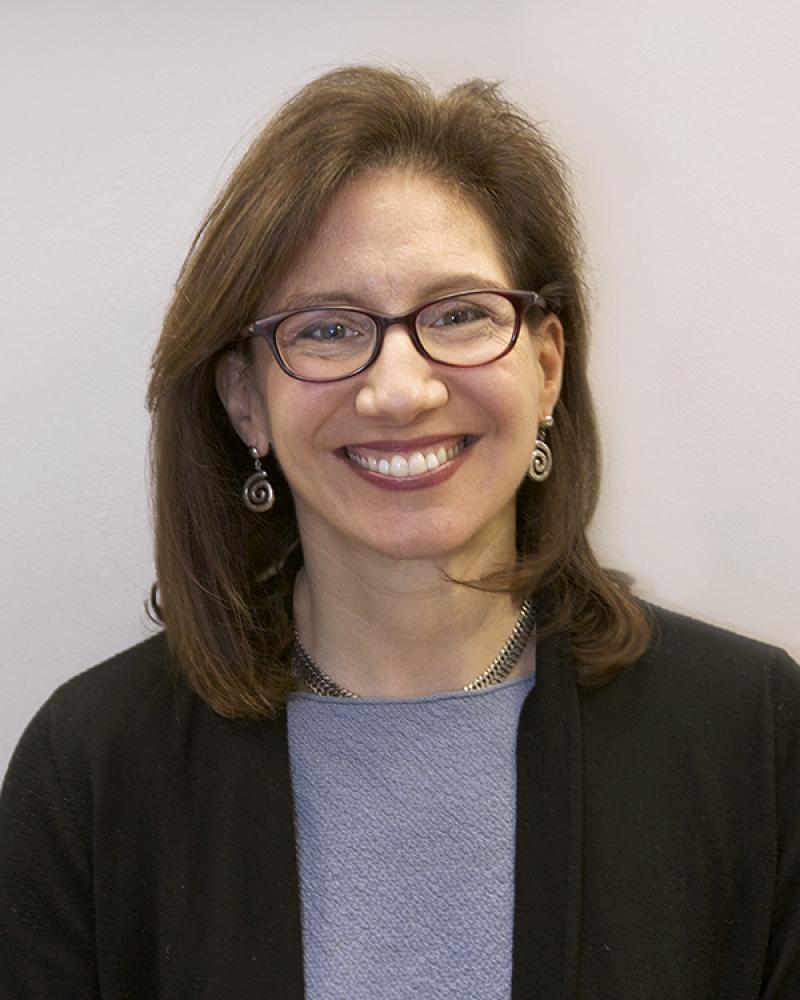
Beginning in 2017, a Columbia research team began publishing results of a landmark study of campus sexual behaviors, including recommendations for promoting sexual health and preventing unwanted and nonconsensual sex. Carried out in collaboration with Columbia undergraduates, the University-funded Sexual Health Initiative to Foster Transformation (SHIFT) study was co-led by Jennifer S. Hirsch, professor of Sociomedical Sciences, and Claude Ann Mellins, professor of Medical Psychology in the Departments of Psychiatry and Sociomedical Sciences. The study’s findings, first published in academic journals, have since shaped thinking and practice far beyond the confines of scholarly discourse.

The magnitude and innovation of SHIFT were reflected in public coverage of the project, which included a story in The New Yorker about the project’s emphasis on the role of the social environment in shaping student sexual behaviors, and a piece in The Chronicle of Higher Education examining its potential to transform the understanding of campus sexual assault. In 2020, Hirsch and Shamus Khan, a member of the SHIFT team and then professor in Columbia’s Department of Sociology, published Sexual Citizens, which drew primarily on SHIFT’s ethnographic component, which they co-directed. Named one of NPR’s books of the year, Sexual Citizens introduced a framework for understanding the forces that shape young people’s sexual relationships, moving past fear-based notions about the dangers of drinking and hook-up culture.
In the last year, Cornell and the University of Michigan have launched undergraduate courses based on Sexual Citizens, and a similar course at the University of Maryland Baltimore County has centered the book’s framework. Columbia, too, has implemented recommendations based on insights from Sexual Citizens and the broader SHIFT project. “It’s so gratifying to see other schools using our research to ground their prevention efforts,” says Hirsch. “Both in SHIFT and with Sexual Citizens, we had an audacious goal: to transform prevention by helping people see the social roots of campus sexual violence. I think we are only beginning to see the power of applying a public health optic to sexual violence prevention, focused on changing the environments that facilitate harm.”

A New Course and First-of-Its-Kind Clinical Trial
This past fall, the University of Michigan announced a major sexual assault prevention initiative: a course based on Sexual Citizens nested within a four-year randomized controlled trial. Incoming first-year undergraduates are randomly selected to take a class that uses Sexual Citizens as a textbook, teaching them to maintain healthy relationships, safeguard sexual health and agency, and prevent sexual misconduct. Students assigned to the control group receive the University’s regular prevention education. Both groups of students are surveyed about their experiences with sex every semester until they graduate. It is the first controlled experiment in the country to test the effectiveness of prevention education explicitly grounded in concepts presented in Sexual Citizens.
“We wanted to see what would happen if we introduced the concept of sexual citizenship and comprehensive sex ed—not as a one-hour workshop during students’ first semester of college, but as an actual class, with a trained professor and text (Sexual Citizens) and opportunities for discussion and reflection,” says Sandra Levitsky, Michigan associate professor of sociology and the study’s co-lead. She adds that she and her collaborators were “inspired by SHIFT to think outside the box with regard to how we do prevention education at Michigan.”

Sexual Citizens Course Gets High Marks
Since 2023, Cornell University has offered an undergraduate course based on Sexual Citizens and its framework of “sexual projects” (an individual’s goals for sex), “sexual citizenship” (a feeling of having the right to say “yes” or “no” to sex and the understanding that others have equivalent rights), and “sexual geographies” (how physical spaces can play a role in preventing sexual assaults). The course explores prevention strategies like ensuring students have access to comprehensive sexuality education before college, targeting mental health and substance abuse, and creating shared spaces for students to socialize late at night.
“Sexual Citizens is at the core of the class, and students utilize the concepts the book sets out to explore their own sexual projects, to reflect on their sexual citizenship, and to reimagine how they can remake the sexual geographies existing on campus,” says Sharon Sassler, Cornell Professor of Public Policy and Sociology and one of the course’s instructors. Student evaluations have been “wildly positive,” Sassler notes, with many pointing to how the course expanded their thinking about sex and sexual violence prevention. Previously a seven-week course, this spring it is being offered in an extended semester-long format.
In addition, Cornell’s Skorton Center for Health Initiatives, in partnership with Sorority and Fraternity Life, is piloting an evidence-based sexual violence prevention program for Greek chapters utilizing concepts from Sexual Citizens. In feedback collected by facilitators, attendees noted that discussions of sexual projects, citizenship, and agency were particularly meaningful.

Making a Difference on Sexual Consent
Four years ago, seeing deficiencies in short-form sexual violence prevention trainings offered through undergraduate onboarding and orientation, several faculty and staff members at the University of Maryland Baltimore County (UMBC) launched a course they titled “Rated R for Relationships: Sex, Power, and Creating a Culture of Respect.” Today, the elective is offered every semester in two sections, with classes that combine readings with discussions of personal values, communication, consent, and other topics, such as the history of campus activism to address sexual violence and what bystander intervention might look like on social media. Over time, the syllabus has increasingly drawn on Sexual Citizens—driven in part by student feedback who identified the book as very informative and relevant to their experiences. In 2024, the course was renamed “Consent, Respect, and Sexual Citizenship.”
The UMBC course isn’t just popular—preliminary research suggests it may be moving the needle with students reporting they are leading sex and romantic lives more in line with their values and that they were better able to navigate sexual consent. “We found that from the beginning to the end of the semester, there was a significant improvement in those areas,” says Christopher Murphy, professor of psychology at UMBC, who helped develop the course curriculum and is leading efforts to study its efficacy in preventing gender-based violence.

A Supportive Environment at Columbia
Columbia, too, has taken lessons from SHIFT. Partly in response to the study’s findings, the University has created new social spaces for students in recent years. These include Special Interest Communities (SICs)—residential communities for students who want to live with peers who share common identities or interests. Examples include Black, Indigenous, Latino, Queer and Trans, Muslim, first-generation and/or low-income students, musicians, writers, and technology and environment-oriented communities. Another campus improvement extended the hours of JJ’s Place, a campus dining hall and a popular spot for student socializing.
Prevention strategies identified through SHIFT “create an opportunity to decrease student vulnerability when seeking social spaces and late-night bites, free from the pressures or challenges that can exist when socializing in someone’s dorm or apartment,” says La’Shawn Rivera, executive director of the University’s Sexual Violence Response initiative. The initiative’s research reinforced the foundations for the University’s prevention strategies, including its bystander intervention framework and consent-based education. “Sexual Citizens offered evidence-based support for the strategies that the university continues to prioritize, showing that our approach to these issues is both necessary and effective,” she says.

The continued impact of SHIFT and Sexual Citizens, as seen at Columbia and beyond, was only possible due to the University’s considerable investment in the research project, which dates back more than ten years. “I always want to lift up just how extraordinary it was that Columbia supported us to do this work,” Hirsch says. “Few universities have welcomed it when their own faculty seek to do research examining sexual violence, and we certainly do not know of another school that has provided substantial funding for interdisciplinary team science to advance knowledge on this problem, which takes such a toll on students in higher education.”
Hirsch says the impact of the work is “a textbook example of what research-to-policy translation looks like.” Getting there took hard work. She continues: “To help people think differently about how to solve what has been an intractable problem, Shamus [Kahn] and I spoke on campuses across the country, to state sexual violence coalitions, and to stakeholders ranging from college presidents to insurance executives to Title IX officers. It’s not enough to generate a new understanding of how to solve a problem—you have to hustle, relentlessly, to connect with stakeholders situated to pick up that understanding and make change.”
Hirsch says the payoff could be substantial: “This could be an inflection point, where schools start to pivot from simply telling students about the consequences of bad behavior to helping them learn the necessary skills to be sexual without causing harm, and to changing the environments to channel students towards safer ways of interacting.”
Photo credit (Jennifer S. Hirsch): Kevin Grady/Harvard Radcliffe Institute