
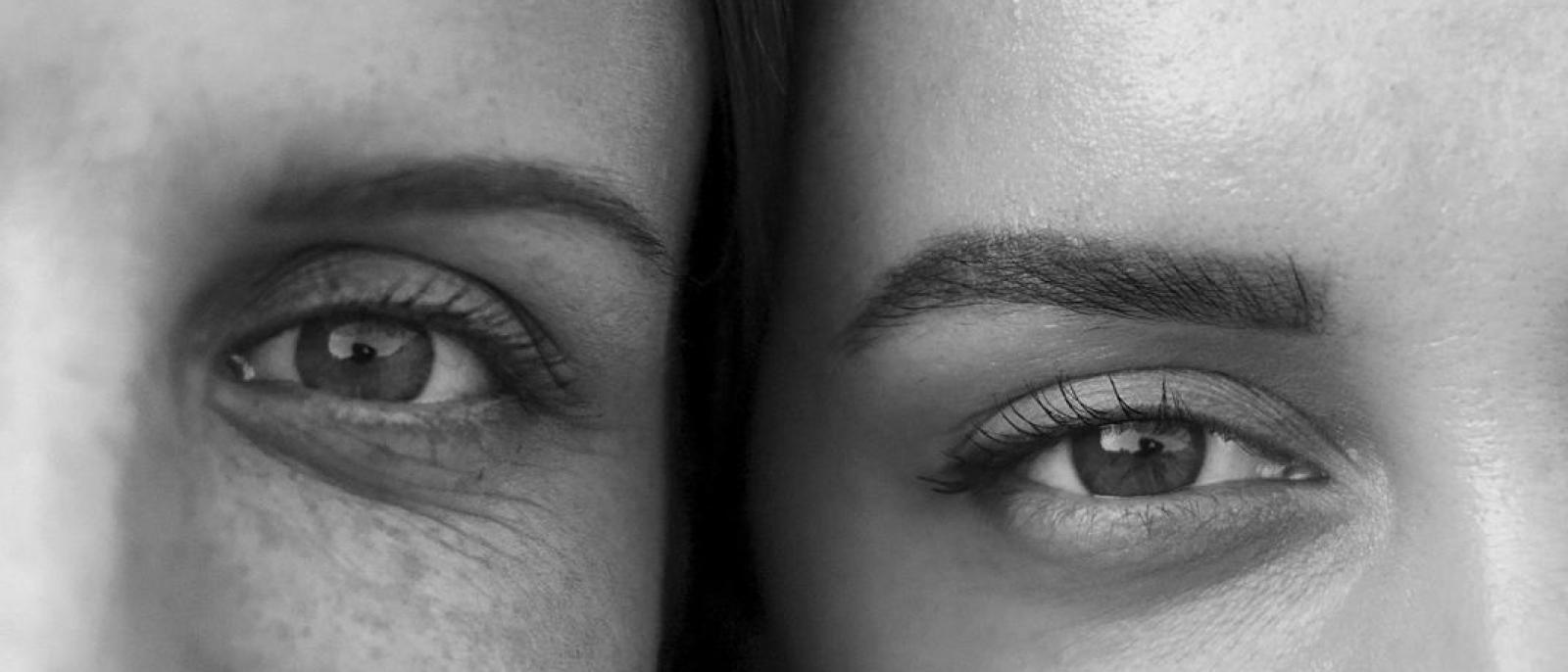
Prioritizing Women's Health
Research into the three M’s of women’s health—menstruation, maternity, and menopause—has uncovered new insights about the start of puberty, shed light on mothers’ mental health, and laid a foundation for much-needed conversations about menopause.
In her 80-year lifespan, the average American woman will menstruate more than 400 times, give birth to one or two children, and have symptoms of menopause for five to ten years. These profound, hormonally driven experiences are linked to public health, yet woefully underresearched. The majority of studies in the field of aging, for example, fail to consider menopause. Public health scientists across multiple departments at Columbia Mailman School are working to bridge this gap. And though federal funding cuts have slowed progress, there’s exciting research to report and more on the horizon.
Menstruation
Today, an American girl is an average of 11.9 years old when she gets her first period, down from 12.5 years in the 1950s and 1960s. Concerns about earlier periods popped up in the headlines after research linked earlier puberty to increased breast cancer risk later in life. Studies have also connected early periods to obesity, type 2 diabetes, and cardiovascular disease.
Menarche, or first period, is the culmination of a process that happens over multiple years, and researchers at the School are now examining that process more thoroughly. An initial part of puberty, breast development, is happening sooner. Lauren Houghton, PhD, assistant professor of Epidemiology, aims to understand why girls are experiencing breast development earlier than in the past. In a paper that is currently under peer review, Houghton brings together two previously siloed bodies of research—pediatric research on body mass index and psychology research on stress—to test if increased stress in the presence of increased fat tissue accelerates puberty.
Two to four years after breast development begins, the first menstrual period arrives. Houghton is among the thought leaders, including the American College of Obstetricians and Gynecologists, to call for menstruation (or its absence) to be considered a vital sign. “Just as clinicians regularly check blood pressure, they should also inquire about menstrual health, including last menstrual period, cycle length and regularity, and associated symptoms that occur around menstruation,” Houghton wrote in a 2024 paper. “Menstrual cycle characteristics outside clinical norms, or changes over time for an individual, may be a warning sign of endometriosis or another health condition.”
Though Houghton thinks about menstruation daily, she has never been directly funded to research it. The research community has historically viewed menstruation as either a routine biological process undeserving of dedicated funding—particularly when weighed against diseases like cancer—or as a nuisance, Houghton notes. That exclusion means there are gaps in knowledge, and outdated information, about the menstrual cycle. For instance, the common belief that the average menstrual cycle lasts 28 days comes from research that is more than half a century old.
Smartphone apps that track period length and symptoms could help researchers like Houghton refresh such outdated information. Some period tracking apps, while maintaining user privacy, share large, deidentified datasets with public health researchers who use them to conduct studies that aim to improve women’s health. (While some women became concerned about using period tracking apps after Roe v. Wade was overturned, for fear their data could be used against them, Houghton says in states with data protections, using a period tracking app that supports public health research is a way for users to “protest with their period” against the historic lack of research into women’s health.) Houghton utilizes pseudonymized data from the app Clue in her research. “Embracing the noise of the menstrual cycle would help us better study so many health outcomes for women,” she says, “because if you don’t account for it, you’re either missing something or you’re masking it.”
While menstruation is an intimate function, it has important implications not only for health but also for a woman’s life in the outside world. “It’s super impactful to people’s daily lives and ability to thrive,” says Marni Sommer, DrPH ’08, MSN, RN, professor of Sociomedical Sciences, who has worked to draw more attention to menstrual health. Sommer directs GATE (Gender, Adolescent Transitions & Environment), a research program dedicated to improving the lives of girls and women through puberty and adolescent development, menstrual health and hygiene, and access to sanitation.
Recent GATE research found that adolescent girls across the United States aren’t getting their menstrual health needs met, whether it’s information about their first period, symptom relief, or school-based support. “For a young person, menstruation can bring shame and discomfort and an inability to engage in the world in a full way,” Sommer says. “Conversely, being adequately recognized and supported—for example, having easy access to bathrooms and menstrual supplies in schools and other public places—is such a transformative way of experiencing your period.”
GATE’s work extends beyond the U.S. Sommer collaborated with colleagues around the world to publish a list of national-level priorities for menstrual health and hygiene for adolescent girls, including improved menstrual health education, adequate sanitation facilities in schools, access to menstrual materials, and policies that support these goals. With support from UNICEF and the Gates Foundation, they are working to see these incorporated into national-level monitoring and budgets of countries in Asia and Africa.
A GATE study assessing menstruation-friendly public toilets in New York City, Barcelona, Kampala, Manila, Osaka, and Rio de Janeiro found all six cities lacking. As part of the study, researchers collected stories of “Menstruation on the Move,” asking women how their period impacted their ability to travel about their city. One respondent noted that Barcelona has limited menstrual-friendly public toilets. “You have to go to a bar and ask for something to go to the bathroom,” her translated response says. “I have never found a bathroom where there was access to emergency pads or tampons. For those of us who have irregular periods, this is a big problem.”
Groundbreaking work on another aspect of menstrual health is coming from the Environmental Health Sciences department, where assistant professor Kathrin Schilling, MSc, PhD, found that several tampon brands contain lead, arsenic, and cadmium—concerning given that vaginal skin has an especially high potential for chemical absorption. Exposure to metals has been found to increase the risk of dementia, infertility, diabetes, and cancer.
Maternity
For many women, the next major landmark along their health journey is pregnancy. In recent research, Columbia Mailman School faculty found that creating an environment for a healthy maternity phase begins well before conception. Teresa Janevic, PhD ’08, associate professor of Epidemiology, found that prediabetes in youth is linked to poor pregnancy outcomes, such as gestational diabetes and hypertensive disorders. Prediabetes care isn’t standardized, but Janevic’s work flags the importance of intervening even in young girls. “Diabetes and cardiovascular health aren’t just important to midlife and older people,” she says. Janevic has done other research revealing that structural and interpersonal racism are associated with increased postpartum blood pressure, another cardiovascular risk factor. This can set up women for a higher lifelong burden of disease, including stroke. “That physiological wear and tear on the body might have lasting effects for the mother and even the infant,” Janevic says.

The dramatic changes pregnancy induces in a woman’s physiology, anatomy, metabolism, hormones, and immune function don’t necessarily disappear after childbirth; they can have ripple effects on a woman’s health that extend far beyond nine months. Calen Patrick Ryan, PhD, associate research scientist in the Robert N. Butler Columbia Aging Center, says that “while most of these changes resolve postpartum, some may leave lasting imprints, even at the molecular level.” One example: In a study done in the Philippines, Ryan and others observed that women with more pregnancies had a higher epigenetic age—that is, a higher biologic age, which differs from their chronologic age. The effects may be more pronounced in women with fewer resources or limited access to healthcare.
The importance of policies that support maternal health was made clear in Janevic’s recent work showing that postpartum Medicaid extension decreased inequities in insurance coverage for immigrant women in New York City. “From pregnancy and through postpartum is a critical period,” she says. “It’s really important to support these women.” Her colleague Jamie Daw, PhD, assistant professor of Health Policy and Management, published research in May showing that only a quarter of mothers are in “excellent” mental health, a steep drop from more than one-third in 2016. Daw and colleagues found consistently worse health status among mothers versus fathers and note that poor mental health in parents can have a detrimental long-term effect on a child’s mental and physical health. “Maternal mortality may be a canary in the coal mine for women’s health more broadly,” they wrote, adding that “addressing rising population-level rates of poor maternal mental health both during and beyond the perinatal period should be a central focus of policy efforts.”
While American mothers’ mental health is on the brink, the dismantling of the U.S. Agency for International Development (USAID) slashed support for millions of women worldwide. “In times of crisis, women and girls tend to be deprioritized,” Thoai Ngo, PhD, MHS, chair of the Heilbrunn Department of Population and Family Health, told MIT Technology Review. Ngo brought together a group that collected data from February to May 2025 to understand the impact of the loss of USAID. At a School event, Sara Casey, MIA ’02, MPH ’02, DrPH ’16, associate professor of Population and Family Health, presented data from more than 100 organizations across six continents, collected through Columbia’s Global Health Action and Evidence Program, that showed extremely widespread disruptions to mental health and reproductive healthcare, including closed clinics, women with no safe place to give birth, and children who can no longer find a health provider. The event was aptly titled: Frozen Aid, Failing Women.
Menopause
For decades, Marni Sommer had focused her research on menstruation. Then she found herself fielding calls from friends—educated, well-connected women who had strong relationships with their doctors—seeking perimenopause advice. “These are privileged, thoughtful women, yet they don’t know what’s going on in their bodies. It just seemed insane,” she recalls.
Sommer decided to expand her research portfolio to include menopause. The starting point: a joint survey with colleagues from Georgetown University and Johns Hopkins University on how perimenopause—the yearslong transition from the reproductive period to menopause—affects women working in academic environments. Nearly 400 faculty and staff from the universities were surveyed in English or Spanish. The findings were accepted for presentation at the Menopause Society conference this fall.
Researchers explored the symptoms women encountered at work—including hot flashes, brain fog, erratic bleeding, and mood changes—as well as how they managed those symptoms, their workplace environment and conditions, and the nature of their jobs. The study combined quantitative data with open-ended questions about personal experiences and recommendations.
Future areas of research could include a deeper look into how workplaces can support women in perimenopause and translating the findings into practical guidance, Sommer notes. The work represents just the beginning of what could be a larger research program at Columbia Mailman School and an expanded recognition of the connection between menopause research and research into healthy aging, an area where the School already excels. “Menopause and perimenopause can be really disruptive,” Sommer says. “Survey respondents wished there wasn’t so much silence around it and that it wasn’t so stigmatized. They wished people were given grace to manage their symptoms, whatever they are.”
Christina Hernandez Sherwood has an MS from Columbia Journalism School. Find her at christinahernandezsherwood.com.
Prioritizing Women's Health was first published in the 2025-2026 issue of Columbia Public Health Magazine.
Related Information
Meet Our Team
- previous
- 2 of 2